PEACENOTWAR MAKEFRIENDNOTENEMY FEAR ALLAH NOT MAN.ISLAM MEANS PEACE.ISLAM FOR ALL. MUSLIMS ARE NOT TERRORIST AND TERRORIST ARE NOT MUSLIM.PLEASE BE INFORMED THAT ALL PICTURES AND TEXT IN THIS BLOG ARE TAKEN FROM THE WEB UNDER FAIR USE TREATY AND FOR MY PERSONAL COLLECTION.IF THEIR OWNERS DO NOT LIKE THEIR PICTURES OR ARTICLES APPEAR IN THIS BLOG,PLEASE CONTACT ME TO DELETE..THANKS.
Monday, October 1, 2012
Healing Iraq: Saudi Arabia considers law against 'insulting Isla...
Healing Iraq: Saudi Arabia considers law against 'insulting Isla...: Saudi Arabia is studying new regulations to criminalise insulting Islam, including in social media, and the law could carry heavy penalties...

Saudi Arabia: Women-Only Industrial City to Open in 2013
In the tentative march forward for women’s rights in Saudi Arabia, a women-only city will be constructed in Hofuf Province, in the east of the country. Several more single sex cities are planned in the coming years. Sex segregation in the country, which follows strict Wahabi Sharia laws, is the norm. Saudi Arabia has continued to come under strong criticism from other countries for its blatant marginalization of women. In July, Human Rights Watch called on the International Olympic Committee to demand that, for the first time ever, the country field female athletes at this year’s games. They did, though some women’s rights advocates claimed the move was tokenistic. The country has continued to move slowly toward liberalizing strict gender laws, especially when it comes under international pressure to do so, though without making major systemic changes. Campaigns, both national and international, to let women drive, vote, run in elections, and work freely outside the house have only been marginally successful. The latest news has been met largely with lukewarm appreciation or skepticism. “How can further segregation be expected to solve the problems caused by discrimination?” asks Homa Khaleeli in the Guardian. Khaleeli argues that women-only cities are one more link in the chain of women’s oppression, not a clear step toward undoing it. Via Guardian.

In the tentative march forward for women’s rights in Saudi Arabia, a women-only city will be constructed in Hofuf Province, in the east of the country. Several more single sex cities are planned in the coming years. Sex segregation in the country, which follows strict Wahabi Sharia laws, is the norm. Saudi Arabia has continued to come under strong criticism from other countries for its blatant marginalization of women. In July, Human Rights Watch called on the International Olympic Committee to demand that, for the first time ever, the country field female athletes at this year’s games. They did, though some women’s rights advocates claimed the move was tokenistic. The country has continued to move slowly toward liberalizing strict gender laws, especially when it comes under international pressure to do so, though without making major systemic changes. Campaigns, both national and international, to let women drive, vote, run in elections, and work freely outside the house have only been marginally successful. The latest news has been met largely with lukewarm appreciation or skepticism. “How can further segregation be expected to solve the problems caused by discrimination?” asks Homa Khaleeli in the Guardian. Khaleeli argues that women-only cities are one more link in the chain of women’s oppression, not a clear step toward undoing it. Via Guardian.
SAUDI ARABIA: Women-owned restaurant -- a first -- debuts


Saudi Arabia this month marked the opening of its first restaurant entirely owned and managed by women, local media reported.
But the establishment of this start-up business in the kingdom's Eastern Province did not come without complications. The designers of the project had to make sure that there would be no contact whatsoever between the female staff working in the kitchen and the male customers who visit.
A "separation wall" will isolate the food pickup area from the kitchen to prevent contact between men and the 10 or so women cooking in the kitchen.
Saudi Arabia embraces one of the strictest interpretations of Sunni Islam. Separation between men and women in many public spaces is strictly enforced.
In restaurants, for instance, only men and women related by blood or marriage are allowed to sit at the same table. As in much of the Middle East, eateries and cafes usually have two separate sections: one for families and the other for single men.
The female owner and manager of the new Nourriyat Center for Cooking
was hailed by the local press for "bravely" announcing her real name to
the public.
According to the Saudi daily Al Yaum, it is the first time that a business appears under the real name of its female owner. The newspaper said that women traditionally used fake names when they opened businesses in the kingdom to avoid social stigmatization.
Noura Moukaytib, owner of the restaurant, told the newspaper that she wanted to challenge "those with obstinate minds" who look down on active women.
In its first phase, the new restaurant will offer only "Eastern and Western" takeaway fast food delivered to customers through a cashier.
Delivery of the orders will be conducted through a window specially designed to prevent men and women from "revealing themselves to one another."
Saudi Arabia has been widely criticized for failing to provide women with employment opportunities. Some human rights organizations and activists qualify the discrimination against women in the country as "gender apartheid."
According to local figures, women in Saudia Arabia make up 70% of students enrolled in universities but just 5% of the kingdom's workforce.
-- Raed Rafei in Beirut
Photo: Women cooking in the kitchen of the first Saudi restaurant completely run and managed by women. Credit: Al Yaum (used by permission)
P.S. Get news from the Middle East in your mailbox every day. The Los Angeles Times distributes a free daily newsletter with the latest headlines from the Middle East, including the conflicts in Iraq and Afghanistan. You can subscribe by logging in at the website here, clicking on the box for "L.A. Times updates" and then clicking on the "World: Mideast" box.
According to the Saudi daily Al Yaum, it is the first time that a business appears under the real name of its female owner. The newspaper said that women traditionally used fake names when they opened businesses in the kingdom to avoid social stigmatization.
Noura Moukaytib, owner of the restaurant, told the newspaper that she wanted to challenge "those with obstinate minds" who look down on active women.
In its first phase, the new restaurant will offer only "Eastern and Western" takeaway fast food delivered to customers through a cashier.
Delivery of the orders will be conducted through a window specially designed to prevent men and women from "revealing themselves to one another."
Saudi Arabia has been widely criticized for failing to provide women with employment opportunities. Some human rights organizations and activists qualify the discrimination against women in the country as "gender apartheid."
According to local figures, women in Saudia Arabia make up 70% of students enrolled in universities but just 5% of the kingdom's workforce.
-- Raed Rafei in Beirut
Photo: Women cooking in the kitchen of the first Saudi restaurant completely run and managed by women. Credit: Al Yaum (used by permission)
P.S. Get news from the Middle East in your mailbox every day. The Los Angeles Times distributes a free daily newsletter with the latest headlines from the Middle East, including the conflicts in Iraq and Afghanistan. You can subscribe by logging in at the website here, clicking on the box for "L.A. Times updates" and then clicking on the "World: Mideast" box.
Saudi Arabian Women Clothing – Traditional Dress Abaya
Posted by admin in Arabian Women Clothing on 08 22nd, 2010 | no responses

| Country | Reserves | Production | Reserve life 1 | ||
|---|---|---|---|---|---|
| 109 bbl | 109 m3 | 106 bbl/d | 103 m3/d | years | |
| Saudi Arabia | 267 | 42.4 | 10.2 | 1,620 | 72 |
| Canada | 179 | 28.5 | 3.3 | 520 | 149 |
| Iran | 138 | 21.9 | 4.0 | 640 | 95 |
| Iraq | 115 | 18.3 | 2.1 | 330 | 150 |
| Kuwait | 104 | 16.5 | 2.6 | 410 | 110 |
| United Arab Emirates | 98 | 15.6 | 2.9 | 460 | 93 |
| Venezuela | 87 | 13.8 | 2.7 | 430 | 88 |
| Russia | 60 | 9.5 | 9.9 | 1,570 | 17 |
| Libya | 41 | 6.5 | 1.7 | 270 | 66 |
| Nigeria | 36 | 5.7 | 2.4 | 380 | 41 |
| Kazakhstan | 30 | 4.8 | 1.4 | 220 | 59 |
| United States | 21 | 3.3 | 7.5 | 1,190 | 8 |
| China | 16 | 2.5 | 3.9 | 620 | 11 |
| Qatar | 15 | 2.4 | 0.9 | 140 | 46 |
| Algeria | 12 | 1.9 | 2.2 | 350 | 15 |
| Brazil | 12 | 1.9 | 2.3 | 370 | 14 |
| Mexico/td> | 12 | 1.9 | 3.5 | 560 | 9 |
| Total of top seventeen reserves | 1,243 | 197.6 | 63.5 | 10,100 | 54 |
| |||||
Gulf oil exporters will need to make a clean break

| Wednesday, 19 August 2009 21:04 |
 Saudi Arabia, the world’s biggest oil exporter, is burning close to 750,000 barrels per day (bpd) of its finest quality crude oil to make electricity for its own domestic market. The image is arresting. Quite simply, Saudi Arabia is producing more of its most valuable export commodity than it can sell. The kingdom’s crude output has been rising of late. It is still pumping less crude than a year ago, but not due to dwindling oil reserves or difficulties in maintaining output from ageing fields, as “peak oil” theorists had earlier predicted. In fact, the national petroleum company, Saudi Aramco, has just completed the biggest oil development programme in its history, which has had the effect of more than doubling Saudi spare production capacity to about 4 million bpd. In view of slumping world oil demand, that is a problem for the kingdom. So for the moment, OPEC production targets and the Saudi king’s firm views about leaving oil in the ground for future generations are taking a back seat to immediate economic concerns. This summer, Riyadh cancelled seasonal fuel-oil imports in favour of burning more crude to run air conditioners. It was a simple business decision that speaks volumes. The international market price of the best quality Saudi crude had fallen below the price of refinery dregs. So why pay to maintain bigger reserves of a commodity for which the world had lost its appetite? By June, according to the International Energy Agency (IEA), domestic Saudi crude-burning had jumped to 715,000 bpd from 150,000 bpd in the first quarter. With the Arabian summer progressing to its sweltering climax, it has probably increased further. By now, after raising production by 70,000 bpd last month, the kingdom may be burning more crude in its power plants than its western neighbour, Egypt, pumps in total. Saudi Arabia’s situation starkly illustrates the dilemma facing all Gulf exporters pondering the outlook for world oil demand as a devastating global recession draws to a close. Should they prepare for a return to “business as usual” by investing in new production capacity to accommodate resurgent demand, or should they brace for a new world order in which oil consumption recovers slowly, or not at all, as consumers make a permanent switch to more fuel-efficient vehicles and cleaner power sources? There is a huge financial penalty for making the wrong choice. Oil development is not cheap. The cost of maintaining idle wells and empty pipelines is also high. But allowing shrinking spare capacity to trigger another oil price shock could unleash a consumer backlash from which the petroleum industry might never recover. The IEA, which advises 28 industrialised nations on energy, is already hinting that a new price spike may not be far off. Lately, these matters have been troubling OPEC economists, who have put a price of US$250 billion (Dh918.25bn) on the “uncertainty gap” for the upstream oil investment requirements of OPEC members in the next decade. They estimate that by 2020, demand for OPEC crude could either reach 37 million bpd or stay close to the current level of about 29 million bpd. There is a “real prospect of wasting resources on unneeded capacity”, said Mohamed Hamel, a senior OPEC adviser. OPEC had a sufficient resource base, he said. But key supply issues now included “uncertainties surrounding the extent to which increases in the demand for crude will actually materialise”. Even before the recession took hold, Abu Dhabi was seeking advice from international oil companies on how to extend the life of petroleum as a transportation fuel. Last September, Malcolm Brinded, the Royal Dutch Shell executive director of exploration and production, gave a presentation on ways to counter competition from electric cars and hostility from environmentalists. Mr Brinded said Abu Dhabi should recognise the benefits of blending biofuels with petrol to reduce carbon emissions, and should promote carbon capture and storage (CCS) to “leave more carbon space for oil in transport”. Otherwise, he said, “the world may be forced to conclude that climate pressures are so strong that there is no option but to decarbonise transport, whatever the cost and convenience advantages of oil”. Abu Dhabi has been doing both. The emirate may never be an agricultural powerhouse, but Masdar, its renewable energy flagship, has been exploring the biofuel potential of crops grown to reverse desertification. Algal biofuel developments are a stronger possibility, and ExxonMobil, which holds an Abu Dhabi offshore oil concession, has recently run advertising here featuring its new algal research initiative. CCS projects are a more natural fit because they draw on the oil and gas industry’s core competencies. Masdar has teamed up with BP, Rio Tinto and Abu Dhabi National Oil Company to develop an ambitious CCS network for Abu Dhabi. This is not mere “greenwash”. The long-term future of petroleum-based transportation fuels may lie in supplementing cleaner power sources that have drawbacks related to reliability or convenience. Examples are hybrid cars that run on electricity and petrol, and ships designed to run on solar power and diesel. To win their customers’ trust in future, Gulf oil exporters will need to be viewed as partners in the transition to a lower carbon economy, and should embrace the resulting business opportunities. They will not benefit commercially from trying to hold back the tide. Global Arab Network Tamsin Carlisle, Copyright The National, this article first appeared in The National on (August 17. 2009 ). |
Oil Twilight
Twilight in the Desert: The Coming Saudi Oil Shock and the World Economy, Matthew R. Simmons, 2005
Here’s a sleeper only discovered after watching the recent Sundance channel apocalyptic documentary A Crude Awakening: the Oil Crash which heavily featured comments by energy expert Matthew Simmons.
A Crude Awakening makes some startling revelations about alternate energy sources. Hydrogen fuel is 50 years away from solving the problems of production, storage, and distribution. Hydrogen today requires five times the energy to produce that it supplies. If all automobiles in the world were replaced by hybids tomorrow, the oil supply would extend another two years at best. Replacing current electric generation facilities with nuclear power would require the building of 10,000 nuclear generators that would run out of fuel in 10 years, far sooner than oil. Biofuels have the potential to replace only a negligible quantity of oil. The apocalyptic documentary points out that we are now dependent on oil not only for power, transportation, and heat, but for the very food supply needed (chemical fertilizers) to support our exploding population. Ironically, without oil, the crops needed to produce biofuel cannot be grown. Solar energy is virtually the only viable alternative, but solar energy will require massive investments in research to make it viable on a large scale. Today solar energy is half the efficiency of oil but will soon be as efficient to produce. Wind power is also economically viable but not on a large scale.
Without oil we may be reduced to the population and lifestyles that existed at the beginning of the 20th Century. But evolution only goes one way; forward. What will life look like without oil? If global warming doesn’t get us first, we’re about to find out.
A Crude Awakening openly accuses the Bush administrations of starting a very expensive war in Iraq simply to assure access to a continuing supply of Middle East oil. Oil at any cost. Future and continuing oil wars as oil becomes scarce are one of the forecasts of the documentary.
We have now come to understand that Sadam’s weapons cache was a figment of our brilliant intelligence imaginations. To the people who got us into the Iraq war, the important intelligence probably did not concern the mythical weapons at all but concerned the equally mythical 115 billion barrel proven Iraqi oil reserve. Yet the Kirkuk oil field was discovered in 1927 and is now 78 years old, poorly maintained, and damaged repeatedly by sabotage. It is very unlikely there is anything approaching 115 billion barrels of proven reserve oil in Iraq. Evidence from next door Kuwait is that the world’s best technology from Chevron-Texaco has been unable to revive production in old fields.
Matthew R. Simmons is an oil expert and an industry investment insider. His book does not deal with the environmental impact of oil consumption such as global warming see and here. In fact his only mention of environmentalists is to note their impact on U.S. oil exploration on both coasts and Alaska. No, here is an expert calling attention to the failure of other so called energy experts to understand much less predict the future of oil exploration, production, and demand beginning with the start of big oil after WWII. The failures of the experts to understand oil rivals the failures of the CIA to understand the world over the same period.
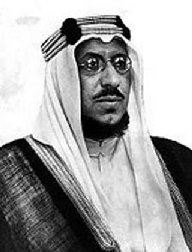
Abd al-`Azīz Āl Sa`ūd 1876-1953 First King of Saudi Arabia father of all kings
In the 1930′s oil sold at the unbelievable price of 10 cents a barrel. When oil stabilized at around $1 a barrel after WWII, experts predicted worldwide economic collapse if oil ever went above this level. The brief OPEC oil embargo of 1973 sent prices to $12 from which they continued to climb through the Iranian Revolution in 1979 to peak at $40 in 1980 after which it dropped into a $12-$20 range until 1998. Prices are now setting records above $80 a barrel. None of this was predicted and the impact on the world economy is unknown. So much for the experts.
If anything, we might conclude that oil is such a cheap energy source compared to anything else that demand is almost perfectly elastic, that is, demand continues to rise and is almost completely insensitive to the price. In the perhaps near future, not only price but armed conflict and force will determine who gets the remaining shrinking supply.
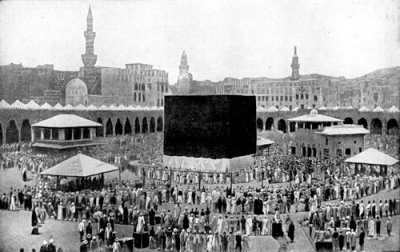
Pilgrims to Mecca were the major source of Saudi revenue before oil
This book focuses on oil reserves, particularly in Saudi Arabia and predicts a rapid decline in worldwide oil production that no price can remedy. No major oil discoveries have been made since 1969 when the Prudhoe Bay, Caspian Sea, and North Sea deposits were discovered. With modern exploration technologies including seismic surveying and computer modeling Simmons argues it is unlikely that there are large undiscovered reserves left somewhere in the world.
Saudi Arabia gets most of its oil from six super-giant oilfields led by Ghawar at 174 miles long and 16 miles wide by far the largest oil field in the world which has alone produced 55 billion barrels of oil to date. To tap these enormous super-giants, very few wells were drilled. To increase or decrease production, operators simply turned the values of these few wells. The American operators, knowing they would soon lose control of the fields to the Saudis greatly increased production starting about 1970. The Saudis took control of oil in 1979, producing through their giant national Saudi Aramco, the largest oil company in the world. Saudi Aramco is a world class company that still employs 8,000 western petroleum experts. Their technology is state of the art. Unfortunately, in 1982, Aramco and the oil ministry made the decision to keep production and reserves secret. Other OPEC members followed and today our knowledge of true production and reserves is limited.
As an example of the unintended consequences of this secrecy, in 1997 OPEC announced increases in quota for all members. A market myth grew to fill the data vacuum created by production secrecy that there was a glut of oil. By 1999, accompanied by an Economist cover article “Drowning in Oil”, prices plummeted. The resulting myths to explain the glut included secret oil reserves and lost tankers wandering the oceans. Oil experts arose everywhere including a company Petrologistics claiming to have spies in every oil port counting the movement of tankers. Petrologistics was one guy working out of his apartment over a bakery in Geneva.
We know that Saudi reserves, said to be 110 billion barrels in 1978 when American oil companies handed over control to Aramco, grew to 260 billion barrels by 1988. These figures have no substantiating details and were probably woven out of whole cloth. During this period, from 1978 to 1988 46 billion barrels had been produced. Simmons believes these almost 200 billion barrels of new proven oil reserves are imaginary. Simmons also notes these supposed reserve discoveries were all made before the technological breakthroughs of 3D seismic analysis. Of Aramco and Saudi oil secrecy Simmons notes:
To get to the truth of Saudi oil production and reserves, Simmons made a close study of more than 200 technical papers published by the Society of Petroleum Engineers (SPE). Many of these papers were written by Aramco scientists and engineers and Simmons wondered why they were allowed to be published when careful reading would contradict official oil statements. I suspect the country is proud of this world leading company and feels its own prestige is enhanced by allowing its technologists to contribute and attend conferences.
You would have to be a specialist to understand most of these papers although Simmons does his best to educate us in the fundamentals of oil production and geology and to summarize and translate the technical papers but its still tough going unless you have a background in petroleum and geology. Greatly simplified, oil is found underground under high pressure. The pressure is sufficient to force the oil to the surface through vertical wells. If oil is overproduced, the pressure drops and there is a risk of oil being lost. To maintain pressure, water is injected via water injection wells. In 1956 40,000 barrels of water per day were being injected. By 1998 12 billion barrels a day were being injected into the two biggest fields. The initial water came from salt water aquifers. Starting in the 70s salt water from the Persian Gulf was piped to the fields for injection. As oil is depleted, more and more water is mixed with the oil extracted. The ratio of oil to water varies but recently about 1/3 has been water. Special processing is required to remove the salt water from the oil. To maintain production Aramco has done extensive horizontal drilling out from the main vertical wells. Care must be taken not to drill through fissures which might water out the well. Papers also describe insoluble tar layers encountered and studies of the effects of changing pressure on seismic activities (narrowing or widening of fissures). These 200 papers, covering research and events over all the major oil fields of Saudi Arabia paint a picture of maturing fields and ever increasing problems trying just to maintain production.
These papers report problems with production consistent with aging oil fields near the end of their productive life. They wrestle with the major problems: When will the giant field water out leaving billions of barrels of oil still in place? Can new technologies recover the oil left behind? What would be the cost of new technology? Can a few remaining years be stretched to a few decades? Simmons major conclusions rely on two factors known to be true outside of secret OPEC and Russia:
First, Eight super giant oilfields including Prudhoe Bay fields and North Seas fields have exhibited the same lifetime production pattern of increased production followed by the peak followed by a decline toward zero. The time frame of useful productivity is typically twenty years with the sole exception of Slaughter in Texas that has lasted sixty years and is still producing. Typical are reserve estimates from Prudhoe Bay. Aramco’s super giant fields have been in production for fifty years.
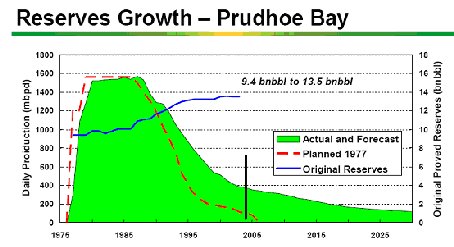
Second, no giant or super giant oil fields have been discovered since 1969 despite improved exploration technology. That is long enough with enough serious effort to project that the era of discovering giant oil fields is past. These last discovered giants all quickly reached their maximum production and then plummeted to enter secondary or tertiary production phases which is much more expensive and produces far less oil. Simmons believes Saudi and other Middle East production is in decline or soon will be.
The Saudis themselves have periodically increased production to stabilize worldwide oil supplies, for example after the Iranian revolution and resulting drop in Iranian production, and during Iraq’s invasion of Kuwait, the gulf war, and oil disruption in Kuwait. Simmons gives elaborate explanations how increased production from Saudis super giants has damaged the fields, increasing the difficulty of future extraction, and reducing the amount of oil that will ever be extracted from these fields. This is called the risk of overproduction.
Simmons does not believe Aramco can increase production to meet further shortfalls in production elsewhere but most experts naively believe the Saudis can produce any amount they choose. Oil production in much of the world, including the U.S. where production peaked in 1970 is in decline. Where will the oil come from to meet increased demand even in the next few years? Simmons doesn’t know.
Simmons also points to the social impact of oil on producing countries. There were 4 million Saudis in 1970 when the price of oil starting climbing rapidly. The Saudis were able to greatly improve the standard of living for their citizens with subsidized or free social services. Unfortunately, their Wahhabist brand of Islam encouraged birth with an average of 6.3 children per household resulting in a population explosion approaching 30 million today. Even at today’s prices and levels of production oil revenue per Saudi is one fifth what it was in 1970. Oil and petrochemicals dominate the Saudi economy and neither require much labor. Without developing other sources of employment, the country is left with massive unemployment and the few jobs that exist are often taken by foreign nationals who are willing to work at menial jobs Saudis are unwilling to take. But even sophisticated Norway, huge beneficiary of North Sea oil, will need to plan carefully for when the oil runs out.
Here’s a sleeper only discovered after watching the recent Sundance channel apocalyptic documentary A Crude Awakening: the Oil Crash which heavily featured comments by energy expert Matthew Simmons.
A Crude Awakening makes some startling revelations about alternate energy sources. Hydrogen fuel is 50 years away from solving the problems of production, storage, and distribution. Hydrogen today requires five times the energy to produce that it supplies. If all automobiles in the world were replaced by hybids tomorrow, the oil supply would extend another two years at best. Replacing current electric generation facilities with nuclear power would require the building of 10,000 nuclear generators that would run out of fuel in 10 years, far sooner than oil. Biofuels have the potential to replace only a negligible quantity of oil. The apocalyptic documentary points out that we are now dependent on oil not only for power, transportation, and heat, but for the very food supply needed (chemical fertilizers) to support our exploding population. Ironically, without oil, the crops needed to produce biofuel cannot be grown. Solar energy is virtually the only viable alternative, but solar energy will require massive investments in research to make it viable on a large scale. Today solar energy is half the efficiency of oil but will soon be as efficient to produce. Wind power is also economically viable but not on a large scale.
Without oil we may be reduced to the population and lifestyles that existed at the beginning of the 20th Century. But evolution only goes one way; forward. What will life look like without oil? If global warming doesn’t get us first, we’re about to find out.
A Crude Awakening openly accuses the Bush administrations of starting a very expensive war in Iraq simply to assure access to a continuing supply of Middle East oil. Oil at any cost. Future and continuing oil wars as oil becomes scarce are one of the forecasts of the documentary.
We have now come to understand that Sadam’s weapons cache was a figment of our brilliant intelligence imaginations. To the people who got us into the Iraq war, the important intelligence probably did not concern the mythical weapons at all but concerned the equally mythical 115 billion barrel proven Iraqi oil reserve. Yet the Kirkuk oil field was discovered in 1927 and is now 78 years old, poorly maintained, and damaged repeatedly by sabotage. It is very unlikely there is anything approaching 115 billion barrels of proven reserve oil in Iraq. Evidence from next door Kuwait is that the world’s best technology from Chevron-Texaco has been unable to revive production in old fields.
Matthew R. Simmons is an oil expert and an industry investment insider. His book does not deal with the environmental impact of oil consumption such as global warming see and here. In fact his only mention of environmentalists is to note their impact on U.S. oil exploration on both coasts and Alaska. No, here is an expert calling attention to the failure of other so called energy experts to understand much less predict the future of oil exploration, production, and demand beginning with the start of big oil after WWII. The failures of the experts to understand oil rivals the failures of the CIA to understand the world over the same period.
Abd al-`Azīz Āl Sa`ūd 1876-1953 First King of Saudi Arabia father of all kings
In the 1930′s oil sold at the unbelievable price of 10 cents a barrel. When oil stabilized at around $1 a barrel after WWII, experts predicted worldwide economic collapse if oil ever went above this level. The brief OPEC oil embargo of 1973 sent prices to $12 from which they continued to climb through the Iranian Revolution in 1979 to peak at $40 in 1980 after which it dropped into a $12-$20 range until 1998. Prices are now setting records above $80 a barrel. None of this was predicted and the impact on the world economy is unknown. So much for the experts.
If anything, we might conclude that oil is such a cheap energy source compared to anything else that demand is almost perfectly elastic, that is, demand continues to rise and is almost completely insensitive to the price. In the perhaps near future, not only price but armed conflict and force will determine who gets the remaining shrinking supply.
Pilgrims to Mecca were the major source of Saudi revenue before oil
This book focuses on oil reserves, particularly in Saudi Arabia and predicts a rapid decline in worldwide oil production that no price can remedy. No major oil discoveries have been made since 1969 when the Prudhoe Bay, Caspian Sea, and North Sea deposits were discovered. With modern exploration technologies including seismic surveying and computer modeling Simmons argues it is unlikely that there are large undiscovered reserves left somewhere in the world.
Saudi Arabia gets most of its oil from six super-giant oilfields led by Ghawar at 174 miles long and 16 miles wide by far the largest oil field in the world which has alone produced 55 billion barrels of oil to date. To tap these enormous super-giants, very few wells were drilled. To increase or decrease production, operators simply turned the values of these few wells. The American operators, knowing they would soon lose control of the fields to the Saudis greatly increased production starting about 1970. The Saudis took control of oil in 1979, producing through their giant national Saudi Aramco, the largest oil company in the world. Saudi Aramco is a world class company that still employs 8,000 western petroleum experts. Their technology is state of the art. Unfortunately, in 1982, Aramco and the oil ministry made the decision to keep production and reserves secret. Other OPEC members followed and today our knowledge of true production and reserves is limited.
As an example of the unintended consequences of this secrecy, in 1997 OPEC announced increases in quota for all members. A market myth grew to fill the data vacuum created by production secrecy that there was a glut of oil. By 1999, accompanied by an Economist cover article “Drowning in Oil”, prices plummeted. The resulting myths to explain the glut included secret oil reserves and lost tankers wandering the oceans. Oil experts arose everywhere including a company Petrologistics claiming to have spies in every oil port counting the movement of tankers. Petrologistics was one guy working out of his apartment over a bakery in Geneva.
We know that Saudi reserves, said to be 110 billion barrels in 1978 when American oil companies handed over control to Aramco, grew to 260 billion barrels by 1988. These figures have no substantiating details and were probably woven out of whole cloth. During this period, from 1978 to 1988 46 billion barrels had been produced. Simmons believes these almost 200 billion barrels of new proven oil reserves are imaginary. Simmons also notes these supposed reserve discoveries were all made before the technological breakthroughs of 3D seismic analysis. Of Aramco and Saudi oil secrecy Simmons notes:
History has frequently shown that once secrecy envelops the culture of either a company or a country, those most surprised when the truth comes out are often the insiders who created the secrets in the first place. Such surprises may well have occurred within the ranks of Aramco and even at Saudi Arabia’s Petroleum Ministry.Don’t smoke your own dope!
To get to the truth of Saudi oil production and reserves, Simmons made a close study of more than 200 technical papers published by the Society of Petroleum Engineers (SPE). Many of these papers were written by Aramco scientists and engineers and Simmons wondered why they were allowed to be published when careful reading would contradict official oil statements. I suspect the country is proud of this world leading company and feels its own prestige is enhanced by allowing its technologists to contribute and attend conferences.
You would have to be a specialist to understand most of these papers although Simmons does his best to educate us in the fundamentals of oil production and geology and to summarize and translate the technical papers but its still tough going unless you have a background in petroleum and geology. Greatly simplified, oil is found underground under high pressure. The pressure is sufficient to force the oil to the surface through vertical wells. If oil is overproduced, the pressure drops and there is a risk of oil being lost. To maintain pressure, water is injected via water injection wells. In 1956 40,000 barrels of water per day were being injected. By 1998 12 billion barrels a day were being injected into the two biggest fields. The initial water came from salt water aquifers. Starting in the 70s salt water from the Persian Gulf was piped to the fields for injection. As oil is depleted, more and more water is mixed with the oil extracted. The ratio of oil to water varies but recently about 1/3 has been water. Special processing is required to remove the salt water from the oil. To maintain production Aramco has done extensive horizontal drilling out from the main vertical wells. Care must be taken not to drill through fissures which might water out the well. Papers also describe insoluble tar layers encountered and studies of the effects of changing pressure on seismic activities (narrowing or widening of fissures). These 200 papers, covering research and events over all the major oil fields of Saudi Arabia paint a picture of maturing fields and ever increasing problems trying just to maintain production.
These papers report problems with production consistent with aging oil fields near the end of their productive life. They wrestle with the major problems: When will the giant field water out leaving billions of barrels of oil still in place? Can new technologies recover the oil left behind? What would be the cost of new technology? Can a few remaining years be stretched to a few decades? Simmons major conclusions rely on two factors known to be true outside of secret OPEC and Russia:
First, Eight super giant oilfields including Prudhoe Bay fields and North Seas fields have exhibited the same lifetime production pattern of increased production followed by the peak followed by a decline toward zero. The time frame of useful productivity is typically twenty years with the sole exception of Slaughter in Texas that has lasted sixty years and is still producing. Typical are reserve estimates from Prudhoe Bay. Aramco’s super giant fields have been in production for fifty years.
Second, no giant or super giant oil fields have been discovered since 1969 despite improved exploration technology. That is long enough with enough serious effort to project that the era of discovering giant oil fields is past. These last discovered giants all quickly reached their maximum production and then plummeted to enter secondary or tertiary production phases which is much more expensive and produces far less oil. Simmons believes Saudi and other Middle East production is in decline or soon will be.
The Saudis themselves have periodically increased production to stabilize worldwide oil supplies, for example after the Iranian revolution and resulting drop in Iranian production, and during Iraq’s invasion of Kuwait, the gulf war, and oil disruption in Kuwait. Simmons gives elaborate explanations how increased production from Saudis super giants has damaged the fields, increasing the difficulty of future extraction, and reducing the amount of oil that will ever be extracted from these fields. This is called the risk of overproduction.
Simmons does not believe Aramco can increase production to meet further shortfalls in production elsewhere but most experts naively believe the Saudis can produce any amount they choose. Oil production in much of the world, including the U.S. where production peaked in 1970 is in decline. Where will the oil come from to meet increased demand even in the next few years? Simmons doesn’t know.
Simmons also points to the social impact of oil on producing countries. There were 4 million Saudis in 1970 when the price of oil starting climbing rapidly. The Saudis were able to greatly improve the standard of living for their citizens with subsidized or free social services. Unfortunately, their Wahhabist brand of Islam encouraged birth with an average of 6.3 children per household resulting in a population explosion approaching 30 million today. Even at today’s prices and levels of production oil revenue per Saudi is one fifth what it was in 1970. Oil and petrochemicals dominate the Saudi economy and neither require much labor. Without developing other sources of employment, the country is left with massive unemployment and the few jobs that exist are often taken by foreign nationals who are willing to work at menial jobs Saudis are unwilling to take. But even sophisticated Norway, huge beneficiary of North Sea oil, will need to plan carefully for when the oil runs out.
The man behind the movie


Tanya Cariina Hsu
Sunday 30 September 2012
THIS is the face of the man who created the
painful-to-watch video, Innocence of Muslims. Whilst the Prophet’s face
should not be shown, there is no reason to not reveal Nakoula Basseley
Nakoula’s image, much protected in the media in fear for his safety.
(The actress above was tricked into believing she was playing the
daughter of a man named George in a film called Desert Warriors.) And on
Thursday Sept. 27, Nakoula was arrested in Los Angeles.
The few minutes of video that have been seen online are merely a collection of scenes from a full-length film that has been shown once. One time only and seen by a grand total of 10 people. Millions, however, have seen the YouTube edit, protests have broken out in 30 countries, and more than 50 people have been killed. Had the Egyptian television anchor — now accused of being a “Salafist sheikh” by some in the media—not shown the months-old clip on his Al-Nas program, arguably much of the reaction would not have taken place.
The cost of advertising and public relations for new films can sometimes run into the millions of dollars. Well-known Islamophobe darling of the neoconservative crowd Ayaan Hirsi Ali — co-creator of the Dutch anti-Muslim film Submission, which led to the violent death of director Theo van Gogh—added her fair share this week in her assessment of “Muslim Rage” and how it must be stopped front cover of Newsweek. In defense of free speech, Hirsi Ali has repeated Norwegian mass-murderer Anders Breivik’s reasoning that “he had no other choice but to use violence” because his opinions were “censored.” She herself believes that Islam must be defeated entirely; not just “radical” Islam, but “Islam, period,” because Muslims are “not interested in peace.”
All of this free advertising as a result of Nakoula’s video is going to only lead to more money being poured into coffers to produce more anti-Islamic films and videos.
A big-budget $ 30 million film called Muhammad, produced by a Palestinian has long been in the works in Hollywood, and appears to be sympathetic to the Prophet (peace be upon him). Another anti-Muslim film, however, has already raised over $ 2 million since Nakoula’s video became viral. Ali Sina, an Iranian-Canadian ex-Muslim, intends to portray the Prophet Muhammad (peace be upon him) as the leader of a cult – as long as he can secure $ 8 million in further funding. With Islamophobia picking up steam, we should assume donations flooding his way soon meet his goal.
Nakoula, a twice imprisoned felon for drug-manufacturing and bank fraud, relied upon a director of pornographic films, named “Alan Roberts,” for his project. Like Nakoula’s use of “Sam Bacily,” Roberts is the pseudonym for the more mainstream director, Robert Brownwell. The men stripped the film of its original dialogue to create the final video, vast amounts of dialogue dubbed over the actor’s original words.
According to the office of the County of Los Angeles and Film LA, Inc., it was a Christian non-profit organization named Media for Christ that secured the original permit to shoot the film. The owner of Media for Christ is Joseph Nassaralla Abdelmasih, a Coptic Christian who also owns a small television channel named The Way TV. Steve Klein, the ex-Marine Christian-paramilitary Islamophobe who collaborated with Nakoula to make the controversial film, is one of the talk show hosts on Nasaralla’s network.
The interconnection between a small but powerful Islamophobic force was thoroughly documented last year by the Center for American Progress in a well-worth reading report, Fear, Inc. Although the mainly neoconservative elements are highlighted there, it is clear how an increasingly influential radical Christian segment of society is gaining ground and joining forces with the moneyed established Islamophobes. This bodes ill for Muslims around the world.
A Pakistani minister offered a bounty upon Nakoula’s death of $100,000 in a “sacred duty” for revenge. Although the government disassociated itself from his offer, it is insufficient.
When arrested in Los Angeles, Nakoula was held without bond. Not for any of the contents of the inflammatory video: he was detained because he may have violated the terms of his parole. In reality, his only punishment is a possible violation for using the Internet whilst still on probation. Prison is unlikely however, as the violation is normally connected to the original conviction, in this case, check-cashing fraud. Perhaps the worst outcome for him has already occurred: he is now in hiding and has had to put up his California house for sale. A trail of scores of deaths in his video’s wake, this might be the extent of his suffering.
In the world we live in today anyone is free to make any video he or she wants no matter how hateful. It is thus inevitable that Islam is going to come under increasing attack. Nakoula’s film is a tipping point, having opened a Pandora’s box. No Muslim state will be able to change the laws of ‘absolute free speech’ in the United States, and therefore discussions amongst leading Islamic scholars must urgently take place to address an unstoppable deluge of blasphemy. If YouTube is blocked, Vimeo will pick up the slack; if Facebook is shutdown, Twitter takes over.
No one in the 21st century can remain oblivious to the flood of news, images and offenses. Given this reality, rationally addressing the problem is an imperative. The question must be asked, what can clerics do? This time, time is indeed of the essence.
— Tanya Cariina Hsu is a British political analyst specializing in US-Saudi foreign policy.The few minutes of video that have been seen online are merely a collection of scenes from a full-length film that has been shown once. One time only and seen by a grand total of 10 people. Millions, however, have seen the YouTube edit, protests have broken out in 30 countries, and more than 50 people have been killed. Had the Egyptian television anchor — now accused of being a “Salafist sheikh” by some in the media—not shown the months-old clip on his Al-Nas program, arguably much of the reaction would not have taken place.
The cost of advertising and public relations for new films can sometimes run into the millions of dollars. Well-known Islamophobe darling of the neoconservative crowd Ayaan Hirsi Ali — co-creator of the Dutch anti-Muslim film Submission, which led to the violent death of director Theo van Gogh—added her fair share this week in her assessment of “Muslim Rage” and how it must be stopped front cover of Newsweek. In defense of free speech, Hirsi Ali has repeated Norwegian mass-murderer Anders Breivik’s reasoning that “he had no other choice but to use violence” because his opinions were “censored.” She herself believes that Islam must be defeated entirely; not just “radical” Islam, but “Islam, period,” because Muslims are “not interested in peace.”
All of this free advertising as a result of Nakoula’s video is going to only lead to more money being poured into coffers to produce more anti-Islamic films and videos.
A big-budget $ 30 million film called Muhammad, produced by a Palestinian has long been in the works in Hollywood, and appears to be sympathetic to the Prophet (peace be upon him). Another anti-Muslim film, however, has already raised over $ 2 million since Nakoula’s video became viral. Ali Sina, an Iranian-Canadian ex-Muslim, intends to portray the Prophet Muhammad (peace be upon him) as the leader of a cult – as long as he can secure $ 8 million in further funding. With Islamophobia picking up steam, we should assume donations flooding his way soon meet his goal.
Nakoula, a twice imprisoned felon for drug-manufacturing and bank fraud, relied upon a director of pornographic films, named “Alan Roberts,” for his project. Like Nakoula’s use of “Sam Bacily,” Roberts is the pseudonym for the more mainstream director, Robert Brownwell. The men stripped the film of its original dialogue to create the final video, vast amounts of dialogue dubbed over the actor’s original words.
According to the office of the County of Los Angeles and Film LA, Inc., it was a Christian non-profit organization named Media for Christ that secured the original permit to shoot the film. The owner of Media for Christ is Joseph Nassaralla Abdelmasih, a Coptic Christian who also owns a small television channel named The Way TV. Steve Klein, the ex-Marine Christian-paramilitary Islamophobe who collaborated with Nakoula to make the controversial film, is one of the talk show hosts on Nasaralla’s network.
The interconnection between a small but powerful Islamophobic force was thoroughly documented last year by the Center for American Progress in a well-worth reading report, Fear, Inc. Although the mainly neoconservative elements are highlighted there, it is clear how an increasingly influential radical Christian segment of society is gaining ground and joining forces with the moneyed established Islamophobes. This bodes ill for Muslims around the world.
A Pakistani minister offered a bounty upon Nakoula’s death of $100,000 in a “sacred duty” for revenge. Although the government disassociated itself from his offer, it is insufficient.
When arrested in Los Angeles, Nakoula was held without bond. Not for any of the contents of the inflammatory video: he was detained because he may have violated the terms of his parole. In reality, his only punishment is a possible violation for using the Internet whilst still on probation. Prison is unlikely however, as the violation is normally connected to the original conviction, in this case, check-cashing fraud. Perhaps the worst outcome for him has already occurred: he is now in hiding and has had to put up his California house for sale. A trail of scores of deaths in his video’s wake, this might be the extent of his suffering.
In the world we live in today anyone is free to make any video he or she wants no matter how hateful. It is thus inevitable that Islam is going to come under increasing attack. Nakoula’s film is a tipping point, having opened a Pandora’s box. No Muslim state will be able to change the laws of ‘absolute free speech’ in the United States, and therefore discussions amongst leading Islamic scholars must urgently take place to address an unstoppable deluge of blasphemy. If YouTube is blocked, Vimeo will pick up the slack; if Facebook is shutdown, Twitter takes over.
No one in the 21st century can remain oblivious to the flood of news, images and offenses. Given this reality, rationally addressing the problem is an imperative. The question must be asked, what can clerics do? This time, time is indeed of the essence.
Women only to work in Saudi Arabia lingerie shops
 Saudi women will be served only by female staff in lingerie shops
A law allowing only women to work in lingerie shops in Saudi Arabia is coming into force.
Campaigners hope this will end decades of awkwardness in the
Islamic kingdom where women have always been served by male shop
assistants. The heated issue of the total lack of female shop workers in Saudi Arabia has simmered for years.
Many Saudi women say they have felt particularly uncomfortable buying their lingerie from men.
Female campaigners recently increased the pressure for change through a Facebook campaign and a boycott of lingerie stores.
Now King Abdullah's royal decree finally comes into effect, banning male staff from selling female underwear.
"It's about time, it's been a long struggle and the authorities have finally come to their senses," says Radio Jeddah journalist Samar Fatany.
She says she, and any woman who could afford to, would often shop abroad rather than face the embarrassment of giving her underwear size over the counter to a man.
The campaign has gained extra momentum from the increasing number of young women who want to enter the workplace.
The Saudi women who can work are usually the educated elite who do professional jobs in medicine or government.
The new law could potentially create up to 40,000 jobs for ordinary Saudi women who have hitherto had little or no access to employment.
But it also means that male clerks, most of whom are foreign workers, will be out of a job.
It is not far short of a social revolution being pushed through in the teeth of fierce opposition from the kingdom's top clerics.
They do not want to see an increase in the number of women working outside the home.
The kingdom's Grand Mufti, Sheikh Abdel Aziz al-Sheikh, has warned shop owners that employing women is a "crime and prohibited by Islamic sharia law".
"There is already a growing tension between liberals and the religious conservatives in the country and this issue could provoke opposition from the religious police," says Abeer Mishkhas is a columnist for the Saudi paper Asharq al-Awsat.
The Ministry of Labour will be posting observers in shopping centres to make sure the new shop assistants do not get harassed in their first weeks of work.
The ban on male staff in lingerie departments is due to be extended to cosmetics shops from July.
Saudi Students and the Shattering of Illusions

Semi
naked activists from the Ukrainian female rights group Femen protest in
front of the Saudi Arabian embassy against a ban on driving cars for
women in Kiev, Ukraine, Thursday, 16 June 2011. (Photo: AP - Sergei
Chuzavkov)
The recent protests by Saudi women students at King Khalid University
in the southern city of Abha – and subsequent demonstrations by
students of both sexes demanding the sacking of the university’s
president, Abdallah al-Rashed – were not the first of their kind in
Saudi Arabia.
They were the latest in a series of similar actions that have occurred at a number of Saudi universities over the past year. They appear likely to trigger more. Women students later held a sit-in at al-Qassim University in solidarity with their colleagues in Abha to protest against poor conditions at their own institution.
These moves are significant not only because Saudi students have long been quiescent, but also because they were initiated mainly by women – although male students have also joined in. This reflects a clear change of mood and thinking among young Saudis, especially college students, and of their chosen means of expressing themselves.
Young people constitute a large majority in Saudi society. Decision-makers and officials fail to comprehend that they have needs and grievances which can no longer be suppressed by the tried and tested old means. These have now come to the surface in an unexpected manner, with young men and women openly demonstrating to call for the sacking of the top official in charge of their institution.
They put forward demands, rather than meekly begging for favors or charity, as the Saudi mind is supposed to have been trained to do. They reject the status quo with its endemic corruption and administrative and developmental failures.
The oppression to which Saudi women specifically are subject is an important factor too. By taking up the challenge to lead the protests, women students were showing their desire to express and assert themselves and make their broader demands heard. Their initiative cannot be seen in isolation from women’s increasing refusal to accept their systematic marginalization in Saudi life. They were protesting against the entire system that stifles them – and which results in prison-like conditions at their universities. Their protests thus complement the campaign launched by Nawal al-Sharif to demand that women be given the right to drive a car, which she triggered by taking her own car out onto the streets of al-Khobar.
The latest student actions contradict the image the Saudi authorities try to project of the country through the media, and shatter a number of illusions they have long sought to promote.
No exception
Perhaps the key illusion shattered is one on which the official media are particularly keen: that comprehensive progress is being achieved in developing the country, so citizens feel no need to demand any democratic change.
The authorities have been constantly boasting in recent years about the establishment of new universities in different parts of the kingdom, and celebrating this is as a great achievement. But the protests at King Khalid University reveal that these are merely enlarged secondary schools. They bear no semblance to real universities in terms of their buildings and facilities, their teaching methods, or the behavior of their administrators.
Nothing in these universities has been left untouched by administrative and financial corruption – not even cleaning or garbage-collection arrangements. It was this that the students at King Khalid University first complained of, but it could be a metaphor for the entire country, one steeped in the filth of corruption that cannot forever be whitewashed by the media.
Another illusion shattered by the students is that of Saudi exceptionalism. This is the official media’s explanation for why Saudi society has supposedly been unaffected by the Arab Spring. Some imagined that economic prosperity would act as a barrier. Yet the superficial nature of that prosperity, and its lack of solid foundations, proved to be the main crack through which the influence of the Arab Spring could seep in.
Corruption in the universities and in institutions of all kinds, and growing poverty and unemployment that have pushed some young people to suicide, have become issues that can no longer be ignored. Government actions such as prohibiting discussion of poverty in the media only add to the frustration.
The influence of the Arab Spring is clear in the way the university students mobilized and rallied to voice their legitimate demands. It would be wrong to exaggerate or overstate its extent. But it is important to note the change underway in the way people choose to deal with their problems. The student protests were preceded by a growing number of strikes in various private and public sector establishments. They also shatter the illusion that students in Saudi universities have been fully domesticated and are completely removed from the climate that prevails among students in other Arab countries. One demand students raised in the latest protests was for the establishment of elected student bodies in which they could engage and which would represent them, uphold their rights and interests, and be respected by university administrations.
The illusion of Saudi material prosperity is meanwhile being shattered by the growing numbers of poor and unemployed, and by the middle class feeling increasingly squeezed. The pervading culture and practice of corruption is the key reason that successful development schemes, or satisfactory public services and infrastructure, are a rarity.
In short, a new Saudi generation is emerging and is taking a different approach to its reality. Amid numerous major changes both at home and abroad, this generation’s problems have been exacerbated by corruption and neglect, as has its frustration. Ultimately, there will be no alternative to trying to understand their discourse and their demands, and for once respond in a different way.
The author is a Saudi writer.
The views expressed by the author do not necessarily reflect Al-Akhbar's editorial policy.
This article is an edited translation from the Arabic Edition.
They were the latest in a series of similar actions that have occurred at a number of Saudi universities over the past year. They appear likely to trigger more. Women students later held a sit-in at al-Qassim University in solidarity with their colleagues in Abha to protest against poor conditions at their own institution.
These moves are significant not only because Saudi students have long been quiescent, but also because they were initiated mainly by women – although male students have also joined in. This reflects a clear change of mood and thinking among young Saudis, especially college students, and of their chosen means of expressing themselves.
Young people constitute a large majority in Saudi society. Decision-makers and officials fail to comprehend that they have needs and grievances which can no longer be suppressed by the tried and tested old means. These have now come to the surface in an unexpected manner, with young men and women openly demonstrating to call for the sacking of the top official in charge of their institution.
They put forward demands, rather than meekly begging for favors or charity, as the Saudi mind is supposed to have been trained to do. They reject the status quo with its endemic corruption and administrative and developmental failures.
The oppression to which Saudi women specifically are subject is an important factor too. By taking up the challenge to lead the protests, women students were showing their desire to express and assert themselves and make their broader demands heard. Their initiative cannot be seen in isolation from women’s increasing refusal to accept their systematic marginalization in Saudi life. They were protesting against the entire system that stifles them – and which results in prison-like conditions at their universities. Their protests thus complement the campaign launched by Nawal al-Sharif to demand that women be given the right to drive a car, which she triggered by taking her own car out onto the streets of al-Khobar.
The latest student actions contradict the image the Saudi authorities try to project of the country through the media, and shatter a number of illusions they have long sought to promote.
No exception
Perhaps the key illusion shattered is one on which the official media are particularly keen: that comprehensive progress is being achieved in developing the country, so citizens feel no need to demand any democratic change.
The authorities have been constantly boasting in recent years about the establishment of new universities in different parts of the kingdom, and celebrating this is as a great achievement. But the protests at King Khalid University reveal that these are merely enlarged secondary schools. They bear no semblance to real universities in terms of their buildings and facilities, their teaching methods, or the behavior of their administrators.
Nothing in these universities has been left untouched by administrative and financial corruption – not even cleaning or garbage-collection arrangements. It was this that the students at King Khalid University first complained of, but it could be a metaphor for the entire country, one steeped in the filth of corruption that cannot forever be whitewashed by the media.
Another illusion shattered by the students is that of Saudi exceptionalism. This is the official media’s explanation for why Saudi society has supposedly been unaffected by the Arab Spring. Some imagined that economic prosperity would act as a barrier. Yet the superficial nature of that prosperity, and its lack of solid foundations, proved to be the main crack through which the influence of the Arab Spring could seep in.
Corruption in the universities and in institutions of all kinds, and growing poverty and unemployment that have pushed some young people to suicide, have become issues that can no longer be ignored. Government actions such as prohibiting discussion of poverty in the media only add to the frustration.
The influence of the Arab Spring is clear in the way the university students mobilized and rallied to voice their legitimate demands. It would be wrong to exaggerate or overstate its extent. But it is important to note the change underway in the way people choose to deal with their problems. The student protests were preceded by a growing number of strikes in various private and public sector establishments. They also shatter the illusion that students in Saudi universities have been fully domesticated and are completely removed from the climate that prevails among students in other Arab countries. One demand students raised in the latest protests was for the establishment of elected student bodies in which they could engage and which would represent them, uphold their rights and interests, and be respected by university administrations.
The illusion of Saudi material prosperity is meanwhile being shattered by the growing numbers of poor and unemployed, and by the middle class feeling increasingly squeezed. The pervading culture and practice of corruption is the key reason that successful development schemes, or satisfactory public services and infrastructure, are a rarity.
In short, a new Saudi generation is emerging and is taking a different approach to its reality. Amid numerous major changes both at home and abroad, this generation’s problems have been exacerbated by corruption and neglect, as has its frustration. Ultimately, there will be no alternative to trying to understand their discourse and their demands, and for once respond in a different way.
The author is a Saudi writer.
The views expressed by the author do not necessarily reflect Al-Akhbar's editorial policy.
This article is an edited translation from the Arabic Edition.
SAUDI ARABIA: Women threaten to breastfeed drivers if they aren't allowed to drive
But a group of Saudi women has taken the controversial decree a step further in a new campaign to gain the right to drive in the ultra-conservative kingdom, media reports say.
If they're not granted the right to drive, the women are threatening to breastfeed their drivers to establish a symbolic maternal bond.
"Is this is all that is left to us to do: to give our breasts to the foreign drivers?" a Saudi woman named Fatima Shammary was quoted as saying by Gulf News.
The current driving ban applies to all women in Saudi Arabia, regardless of their nationality, and it's been a topic of heated public debate in recent years. The ban on driving was unofficial at first but was introduced as official legislation after 47 Saudi women drove cars through the streets of the Saudi capital, Riyadh, in 1990 in an attempt to challenge authorities.
The incident brought harsh consequences for the women, who were jailed for a day and had their passports confiscated. Many of them were said to have been forced to leave their jobs after the driving protest.
Still, every now and then, reports of Saudi women driving in defiance of the ban emerge in the media.
Two years ago, 125 women in Saudi Arabia signed a petition that called on the Saudi interior minister to lift the ban.
One of the Saudi female signatories, Wajeha Huwaider, posted a video of herself driving on YouTube in a direct appeal to the Saudi authorities to allow women to drive.
"For women to drive is not a political issue," Wajeha said as she sat behind the wheel. "It is not a religious issue. It is a social issue, and we know that many women of our society are capable of driving cars. We also know that many families will allow their women to drive."
-- Alexandra Sandels, in Beirut
Photo: Saudi women look under the hood of a new car at a showroom in Riyadh, where women sell cars to female buyers. Women can still own cars in Saudi Arabia, but they are banned from driving them. Credit: Associated Press
Posted By Ty McCormick
 Tuesday, July 17, 2012 - 12:21 PM

'Within the next two months the Shura Council will reveal the outcome of study on the regulations to combat the criticism of the basic tenets of Islamic sharia,' unnamed sources with knowledge of the matter told al-Watan, adding that there could be ‘severe punishments' for violators.What is puzzling about the proposed legislation is what exactly it would fix. Saudi officials do not appear to be hamstrung by the existing legal apparatus, which metes out justice to dozens of blasphemers every year. In fact, Saudi Arabia does not have a written penal code, meaning that judges already issue rulings based on their own interpretation of the Quran. According to Human Rights Watch, this means that blasphemy convictions are often handed down without citing any legal basis. As a result, anything from insulting the Prophet's companions, to mocking religion, to using "un-Islamic terminology" can get you convicted of blasphemy.
Criticism penalised under the law would include that of the Prophet, early Muslim figures and clerics, it said.
‘The (regulations) are important at the present time because violations over social networks on the Internet have been observed in the past months,' the sources said.
Nor do lily-livered judges or lenient sentences appear to be the problem. In 2008, for instance, a Mecca appeals court upheld the death sentence for Sabi Bogday, a Turkish national, who allegedly insulted God during an argument. In this case, the testimony of two witnesses was sufficient to prove Bogday's guilt.
In fairness, the death sentence for blasphemy seems to be the exception rather than the rule. Flogging and prison time are more standard fare. Still, the argument that Saudi's blasphemy laws are too permissive has a decidedly hollow ring.
Indeed, even the charge that social media is frustrating efforts to keep Saudi's public sphere squeaky clean doesn't hold water. Earlier this year, for instance, 23-year-old Hamza Kashgari was extradited from Malaysia to stand trial after he tweeted that the Prophet was merely inspirational, not divine.
The rumblings in Riyadh, then, probably have less to do with a perceived blasphemy pandemic and more to do with the ruling family's growing unease with the democratic transitions now underway in much of the Middle East. Although it has historically kept the country's religious establishment at arms-length, recent events have convinced the royal family to take all the support it can get.
The Angry Arab News Service/وكالة أنباء العربي الغاضب: women in Egypt in the Nasser years
The Angry Arab News Service/وكالة أنباء العربي الغاضب: women in Egypt in the Nasser years: A class at the Islamic college for women at Al-Azhar University in Cairo in the 1960s.
Saudi's fearless female artists
Saudi Arabia's female artists are finally breaking taboos in the notoriously conservative kingdom and gaining international acclaim, reports Catherine Milner

Image 1 of 5
Noura Bouzo, Manal Al Dowayan and Sarah Abu Abdallah at Art Dubai Photo: RICHARD ALLENBY-PRATT
3:55PM BST 26 Sep 2012
 3 Comments
Manal Al Dowayan is amazed. She has just finished a conversation with one of
the lecturers at Goldsmiths art college in London and is reeling. 'She told
me that she didn’t dare email me because I was such a celebrity!’ she hoots.
'She thought I would be too busy. It blows my mind.’
The fact is that Al Dowayan is a celebrity. Maybe not yet in the echoing white
halls of art in the West (although both the V&A and the British Museum
have just bought her work) but in her home country, Saudi Arabia. The
lecturer with whom she had been talking had just returned from Saudi Arabia,
where, she reported, all the women in the university where she had been
teaching were buzzing about the small, beady 39-year-old artist with a
radiant smile.
There is no public gallery dedicated to modern art in Saudi and only a handful
of commercial galleries, but there is a burgeoning grass-roots movement of
artists who are gaining international acclaim, a large proportion of whom
are women. Last year Raja and Shadia Alem, two sisters from Mecca, were
chosen to represent Saudi Arabia at the Venice Biennale, the world’s
greatest showcase for art, thus catapulting Saudi artists on to the
international stage.
Al Dowayan has seen her work more than quadruple in value in the past five
years (a recent piece sold for what she will only describe as 'a six-figure
sum’). Now a new art centre is opening in Saudi’s capital, Riyadh, whose
founder, creative director and chief curator are all women and whose
inaugural show, 'Soft Power’, shows a selection of thought-provoking works
entirely by female artists.
Alaan Artspace, as it is called, has been set up by Neama A Alsudairy, 29, an
avid collector of contemporary Middle Eastern art. Her plan is for the
centre to become a platform for debate and education about art, as well as a
showcase for the best work by both male and female artists.
Throughout the Middle East women are making their presence known on the arts
scene – most of the top galleries from Lebanon to the United Arab Emirates
are run by them. Sheikha Mayassa Al Thani, the head of the Qatar Museums
Authority, was described in The Economist last year as 'the art world’s most
powerful woman’.
Manal Al Dowayan’s works – photographs and installations in the main – have titles such as Blinded by Tradition and Look beyond the Veil. One of her most celebrated pieces is Suspended Together, a flock of doves made out of the paper chits that Saudi women must get signed by their husbands or male guardians so that they can undergo certain hospital procedures or travel.
Her work on display in the 'Soft Power’ show challenges the new conservative trend in Saudi Arabia that forbids men to use a woman’s name in public.
Al Dowayan has held workshops in schools and villages to encourage women to shout out and paint their names on to wooden spheres that she hangs from the ceiling like enormous prayer beads. 'In this country women are told not to speak loudly,’ she says. 'They are told to wear a veil over their faces and now they are even having their names erased.’ The effect of Al Dowayan’s 2011 installation, called Esmi (My name), has garnered her 2,000 followers on Twitter and many visitors to her website.
'At my first exhibition I wasn’t even allowed to stay in the gallery with my art when the men came to look around,’ recalls Al Dowayan. As things stand, many Saudi homes and public buildings have separate entrances for men and women and gender segregation is observed even on buses and in restaurants. Staff at Alaan say that there will be special 'ladies’ days’ at the centre when only women will be allowed to view the exhibitions, and educational events will be set up for mothers to attend with their children.
Sarah Abu Abdallah is a vivacious and attractive 22-year-old who lives in the east of the country with her parents and siblings. For a year she studied art in the United Arab Emirates – Saudi Arabia’s more liberal neighbour – making her return to the strictures of life in the kingdom all the harder.
Her film Saudi Automobile tells of her frustration at the ban on women driving. It features a car she found crashed by the side of a road, which she painted a glorious pink. 'This wishful gesture was the only way I could get myself a car,’ she says. The metal carcass of the wrecked car makes a surprising object of veneration. But in the film the artist is seen painstakingly painting it in the sweltering sun until she collapses into the passenger seat, defeated.
For the 'Soft Power’ exhibition Abu Abdallah will be installing a car in the gallery space, further emphasising the limits of her rights to vehicle ownership. 'I don’t call for extreme freedom,’ she says. 'But we grow up at a very young age here and the more you grow up the more you realise you will never have full custody of your life.’
Art, it seems, is Abu Abdallah’s lifeline. She reads about it rapaciously, ordering massive tomes from abroad about abstract expressionism and performance art. 'Being a woman in Saudi may be really restricting,’ she says, 'but being a female Saudi artist is very good at the moment. I want to join that wave.’
Noura Bouzo, 28, the daughter of a high-ranking doctor in Saudi, is an artist who also edits the art magazine Oasis, the only one in the country. She set it up with her sister and hopes to make it available on news-stands around the world later this year.
'There are a lot more artists coming up in the younger generation,’ she says. 'In particular, there are some very good photographers.’ There are a lot of good older ones, too. Maha Malluh, who is in her forties, took a series of photographs, 'Tradition and Modernity’, that are poetic, ghostly testaments to the opposing forces within Saudi society. Her picture of hennaed hands projected on to a pair of Marigold gloves says it all.
Jowhara AlSaud, 34, scratches out the faces of women in a photographic negative to express, in stark black and white, the invisibility of women.
However, Bouzo concedes that the infrastructure for making art is still missing in Saudi Arabia. There are no bronze foundries in which to make sculptures, for instance – nor any art schools to speak of. Artists have to seek out inspiration using books, the internet and artistically talented friends and relatives. Many have to travel abroad to receive technical training in art schools in London or New York.
'Things are going in the right direction but still have a long way to go,’ says Bouzo, who will be leading a workshop at Alaan as part of its education programme. Her own work is not in the show but consists of paintings of cinema popcorn buckets – the irony being that in Saudi there are no cinemas.
And then there is Sarah Mohanna Al-Abdali, a 22-year-old graffiti artist who gained notoriety by spraying signs around Jeddah declaiming the defacement of the holy city of Mecca with a towering mass of high-rise blocks.
Her 'Four Wives’ series of drawings relates to the (largely arranged) marriage system in Saudi that allows men to have more than one wife. 'A lot of men pick their wives as if they were a flower – judging them just by how it looks and not worrying about their brains, which are as if buried underground,’ says Al-Abdali. Another work by her features a woman dressed in an abaya standing at the bottom of a well.
All these women’s works show how art gives women a voice denied them by the society in which they live. But while many Saudi women are excited by the idea that art might give expression to what they euphemistically call their 'social problems’, they also hope it might reveal the dignity of their culture, too.
More than 60 per cent of university students from Saudi are women – a higher proportion than in Britain – and yet fewer than 22 per cent get jobs. Many of them study computer technology rather than the humanities and one suspects that the art these science-literate women produce in future may turn out to be the most technologically advanced yet.
Google reports that Saudi Arabia has the highest amount of image-sharing of any country in the world and it is one of the biggest markets in the world for BlackBerry phones. And although the country may be highly conservative in its social mores, in their attitude to science its people are often ultra-modernist, too, embracing technological advances with fervour.
'There is such a cultural void in Saudi at the moment,’ says Manal Al Dowayan. 'All the people have to look at is singers or football players on YouTube. So if other elements come into play, like art – even art celebrities – it’s a good thing. And it’s booming.’
'Soft Power’ runs from 26 September to 10 December (alaanart.com). Manal Al Dowayan and Jowhara AlSaud will exhibit at 'Light from the Middle East’ at the V&A, London SW7 (vam.ac.uk), from 13 November
Manal Al Dowayan’s works – photographs and installations in the main – have titles such as Blinded by Tradition and Look beyond the Veil. One of her most celebrated pieces is Suspended Together, a flock of doves made out of the paper chits that Saudi women must get signed by their husbands or male guardians so that they can undergo certain hospital procedures or travel.
Her work on display in the 'Soft Power’ show challenges the new conservative trend in Saudi Arabia that forbids men to use a woman’s name in public.
Al Dowayan has held workshops in schools and villages to encourage women to shout out and paint their names on to wooden spheres that she hangs from the ceiling like enormous prayer beads. 'In this country women are told not to speak loudly,’ she says. 'They are told to wear a veil over their faces and now they are even having their names erased.’ The effect of Al Dowayan’s 2011 installation, called Esmi (My name), has garnered her 2,000 followers on Twitter and many visitors to her website.
'At my first exhibition I wasn’t even allowed to stay in the gallery with my art when the men came to look around,’ recalls Al Dowayan. As things stand, many Saudi homes and public buildings have separate entrances for men and women and gender segregation is observed even on buses and in restaurants. Staff at Alaan say that there will be special 'ladies’ days’ at the centre when only women will be allowed to view the exhibitions, and educational events will be set up for mothers to attend with their children.
Sarah Abu Abdallah is a vivacious and attractive 22-year-old who lives in the east of the country with her parents and siblings. For a year she studied art in the United Arab Emirates – Saudi Arabia’s more liberal neighbour – making her return to the strictures of life in the kingdom all the harder.
Her film Saudi Automobile tells of her frustration at the ban on women driving. It features a car she found crashed by the side of a road, which she painted a glorious pink. 'This wishful gesture was the only way I could get myself a car,’ she says. The metal carcass of the wrecked car makes a surprising object of veneration. But in the film the artist is seen painstakingly painting it in the sweltering sun until she collapses into the passenger seat, defeated.
For the 'Soft Power’ exhibition Abu Abdallah will be installing a car in the gallery space, further emphasising the limits of her rights to vehicle ownership. 'I don’t call for extreme freedom,’ she says. 'But we grow up at a very young age here and the more you grow up the more you realise you will never have full custody of your life.’
Art, it seems, is Abu Abdallah’s lifeline. She reads about it rapaciously, ordering massive tomes from abroad about abstract expressionism and performance art. 'Being a woman in Saudi may be really restricting,’ she says, 'but being a female Saudi artist is very good at the moment. I want to join that wave.’
Noura Bouzo, 28, the daughter of a high-ranking doctor in Saudi, is an artist who also edits the art magazine Oasis, the only one in the country. She set it up with her sister and hopes to make it available on news-stands around the world later this year.
'There are a lot more artists coming up in the younger generation,’ she says. 'In particular, there are some very good photographers.’ There are a lot of good older ones, too. Maha Malluh, who is in her forties, took a series of photographs, 'Tradition and Modernity’, that are poetic, ghostly testaments to the opposing forces within Saudi society. Her picture of hennaed hands projected on to a pair of Marigold gloves says it all.
Jowhara AlSaud, 34, scratches out the faces of women in a photographic negative to express, in stark black and white, the invisibility of women.
However, Bouzo concedes that the infrastructure for making art is still missing in Saudi Arabia. There are no bronze foundries in which to make sculptures, for instance – nor any art schools to speak of. Artists have to seek out inspiration using books, the internet and artistically talented friends and relatives. Many have to travel abroad to receive technical training in art schools in London or New York.
'Things are going in the right direction but still have a long way to go,’ says Bouzo, who will be leading a workshop at Alaan as part of its education programme. Her own work is not in the show but consists of paintings of cinema popcorn buckets – the irony being that in Saudi there are no cinemas.
And then there is Sarah Mohanna Al-Abdali, a 22-year-old graffiti artist who gained notoriety by spraying signs around Jeddah declaiming the defacement of the holy city of Mecca with a towering mass of high-rise blocks.
Her 'Four Wives’ series of drawings relates to the (largely arranged) marriage system in Saudi that allows men to have more than one wife. 'A lot of men pick their wives as if they were a flower – judging them just by how it looks and not worrying about their brains, which are as if buried underground,’ says Al-Abdali. Another work by her features a woman dressed in an abaya standing at the bottom of a well.
All these women’s works show how art gives women a voice denied them by the society in which they live. But while many Saudi women are excited by the idea that art might give expression to what they euphemistically call their 'social problems’, they also hope it might reveal the dignity of their culture, too.
More than 60 per cent of university students from Saudi are women – a higher proportion than in Britain – and yet fewer than 22 per cent get jobs. Many of them study computer technology rather than the humanities and one suspects that the art these science-literate women produce in future may turn out to be the most technologically advanced yet.
Google reports that Saudi Arabia has the highest amount of image-sharing of any country in the world and it is one of the biggest markets in the world for BlackBerry phones. And although the country may be highly conservative in its social mores, in their attitude to science its people are often ultra-modernist, too, embracing technological advances with fervour.
'There is such a cultural void in Saudi at the moment,’ says Manal Al Dowayan. 'All the people have to look at is singers or football players on YouTube. So if other elements come into play, like art – even art celebrities – it’s a good thing. And it’s booming.’
'Soft Power’ runs from 26 September to 10 December (alaanart.com). Manal Al Dowayan and Jowhara AlSaud will exhibit at 'Light from the Middle East’ at the V&A, London SW7 (vam.ac.uk), from 13 November
Allowing Women To Drive Would Mean No More Virgins, Saudi Arabia Religious Council Says
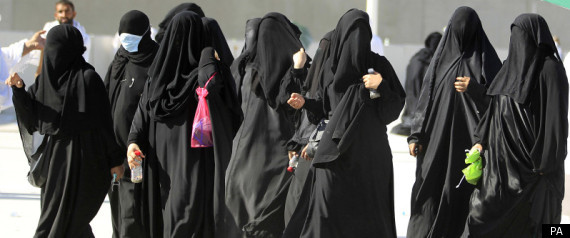
React

Follow
More pornography would be used if women were allowed on the roads and rates of prostitution and divorce would alo rise, the report stated.
Produced in conjunction with Kamal Subhi, a former professor at the King Fahd University, the study into repealing the ban predicted that there would be no more virgins left in the Arab kingdom in 10 years.
Saudi Arabia is the only country in the world which bans women from driving.
Professor Subhi described sitting in a coffee shop in an unnamed Arab state where “all the women were looking at me“.
“One made a gesture that made it clear that she was available,” he said. “This is what happens when women are allowed to drive.”
The report was produced for the country's legislative assembly, the Shura Council. However this institution has no power as Saudi Arabia is ruled by a monarchy with absolute power.
The state’s controversial ban on female drivers last came under attack in September after Shaima Jastaniya was sentenced to 10 lashes just days after Saudi King Abdullah granted women the right to vote. The punishment was overturned after international and domestic pressure.
Saudi Arabia is currently considering a law for women to cover up their eyes if they are deemed too "tempting."
Monday, September 10, 2012
Road accidents in the Gulf: the fastest way to die in the region
The crash in Oman late last month that wiped out seven members of an
Al Ain family has highlighted the daily carnage on the roads of GCC
nations.
Saudi Arabia's official accident figures tell the grim cost of driving
standards in the kingdom, both human and economic.
According to the Interior Ministry's annual report for 2010, the economic cost from accidents was an estimated 21 billion riyals (Dh20.6bn), while the number of fatalities rose by 10 per cent in just a year.
That works out at an average of 19.1 deaths a day on Saudi roads, making them among the most dangerous in the world.
On any given day, motorists can be seen running red lights, speeding, racing, or driving in a reckless and aggressive fashion.
"Just drive for a few minutes and you will see someone running the red lights," says Said Khouri, 36, a Lebanese contractor who lives in Jeddah. "Then drive on the motorway and see how people pass you speeding on the shoulder, or get up on your rear. It's very, very dangerous."
A Saudi resident is more likely to be killed or injured in a traffic accident than in a murder or an assault, according to the Overseas Security Advisory Council, a US government body created to promote security cooperation between American companies abroad and the US Department of State. It is an indicator that Saudi Arabia is a relatively safe country, save for its driving habits.
According to the council's 2012 report: "One common denominator among reported accidents throughout Saudi Arabia is speed, which increases both the number of accidents and their lethality. Aggressive driving is often paired with high speed, with drivers racing, driving on the shoulder to pass, weaving through traffic, and cutting off other drivers."
The report says road rage is common and sometimes leads to physical violence. Texting while driving is also common, and when combined with high speeds and heavy traffic leads to numerous accidents.
Lax enforcement of traffic laws is also blamed.
"We face a major problem here in that the police do not enforce the law," said Faris Al-Ghamdi, 37, a Saudi engineer who suffered a fractured spine three years ago when a driver running a red light ploughed into his sports car. "The other problem is that drivers here think they are above the law, almost invincible. They do whatever they want. Look what all the kids have done about Saher."
Two years ago, Saudi Arabia introduced Saher, an automated traffic control and management system that covers major cities and uses digital cameras linked to the Ministry of Interior's national information centre to register violations. Although it has been credited with saving countless lives by forcing the vast majority to slow down, it is easily foiled.
Motorists of all ages are covering up their front and rear licence plates to make it impossible for violations to be recorded against them.
Zaid Al-Hamzi, spokesman for the Jeddah traffic police, confirmed that Saher was unable to register violations against vehicles with altered licence plates.
"We are using the unmarked traffic patrols cars to find cars that have their plates covered. When part of the licence plate is covered, the cameras are unable to register the violation. But when our secret patrols find a car with its plates covered, the vehicle is impounded for at least a week and the driver is forced to pay a heavy fine."
According to Mr Al-Ghamdi, that is not happening.
"You will see so many cars with their plates covered. That speaks volumes about the average Saudi motorist's respect for the law and its enforcement," he said.
One factor that makes Saudi driving unique is that there are no women drivers. Instead women must rely on the males in the family or a driver to take them places. Regardless, many women do have a view on driving standards.
"I hate going out on the road, they are so congested and full of bad drivers," said Hala Al Qurashi, 32, from Khobar. "Only recently I have started taking the taxi when my husband or driver can't come to pick me up at the time I need to leave. But I am not always lucky and end up with a bad taxi driver so I sit and pray I arrive in one piece."
The mother of two would prefer to drive herself and her children to school, believing she would be a safer driver.
"They are not the driver's children and so he wouldn't be as careful as I would be on the road with them."
Mrs Al Qurashi was in a major crash as a child on her way back from school, when a car ran a red light and smashed into a car carrying her and her two sisters.
"Thank God we were in a big car and only had minor bruises and neck problems," she said. "We could have easily been killed."
Another Saudi woman said she has seen a dramatic improvement in road safety in Jeddah in recent years.
"The cameras they put up along the roads are working, you don't see many drivers racing between themselves over 180 kilometre per hour inside the city streets," said Dr Nouf Al Ahmed.
She believes one of the core problems is that many young drivers do not have a driving licence, or if they do, have obtained it through "wasta" instead of a real test.
"You see kids on the road, some that look 11 years old, behind the wheel. Where are the parents? Where are the police? They are very dangerous and end up killing people."
Alia, who asked for her last name to be withheld, lost her father 10 years ago in a crash when he was driving to Mecca from Jeddah.
"He was left there by the car that hit him, with the police finding him two days later. That is unacceptable," she said.
"He could have been saved if someone stopped and checked on him. There are no manners on the roads here, everyone is out for themselves."
According to the Interior Ministry's annual report for 2010, the economic cost from accidents was an estimated 21 billion riyals (Dh20.6bn), while the number of fatalities rose by 10 per cent in just a year.
That works out at an average of 19.1 deaths a day on Saudi roads, making them among the most dangerous in the world.
On any given day, motorists can be seen running red lights, speeding, racing, or driving in a reckless and aggressive fashion.
"Just drive for a few minutes and you will see someone running the red lights," says Said Khouri, 36, a Lebanese contractor who lives in Jeddah. "Then drive on the motorway and see how people pass you speeding on the shoulder, or get up on your rear. It's very, very dangerous."
A Saudi resident is more likely to be killed or injured in a traffic accident than in a murder or an assault, according to the Overseas Security Advisory Council, a US government body created to promote security cooperation between American companies abroad and the US Department of State. It is an indicator that Saudi Arabia is a relatively safe country, save for its driving habits.
According to the council's 2012 report: "One common denominator among reported accidents throughout Saudi Arabia is speed, which increases both the number of accidents and their lethality. Aggressive driving is often paired with high speed, with drivers racing, driving on the shoulder to pass, weaving through traffic, and cutting off other drivers."
The report says road rage is common and sometimes leads to physical violence. Texting while driving is also common, and when combined with high speeds and heavy traffic leads to numerous accidents.
Lax enforcement of traffic laws is also blamed.
"We face a major problem here in that the police do not enforce the law," said Faris Al-Ghamdi, 37, a Saudi engineer who suffered a fractured spine three years ago when a driver running a red light ploughed into his sports car. "The other problem is that drivers here think they are above the law, almost invincible. They do whatever they want. Look what all the kids have done about Saher."
Two years ago, Saudi Arabia introduced Saher, an automated traffic control and management system that covers major cities and uses digital cameras linked to the Ministry of Interior's national information centre to register violations. Although it has been credited with saving countless lives by forcing the vast majority to slow down, it is easily foiled.
Motorists of all ages are covering up their front and rear licence plates to make it impossible for violations to be recorded against them.
Zaid Al-Hamzi, spokesman for the Jeddah traffic police, confirmed that Saher was unable to register violations against vehicles with altered licence plates.
"We are using the unmarked traffic patrols cars to find cars that have their plates covered. When part of the licence plate is covered, the cameras are unable to register the violation. But when our secret patrols find a car with its plates covered, the vehicle is impounded for at least a week and the driver is forced to pay a heavy fine."
According to Mr Al-Ghamdi, that is not happening.
"You will see so many cars with their plates covered. That speaks volumes about the average Saudi motorist's respect for the law and its enforcement," he said.
One factor that makes Saudi driving unique is that there are no women drivers. Instead women must rely on the males in the family or a driver to take them places. Regardless, many women do have a view on driving standards.
"I hate going out on the road, they are so congested and full of bad drivers," said Hala Al Qurashi, 32, from Khobar. "Only recently I have started taking the taxi when my husband or driver can't come to pick me up at the time I need to leave. But I am not always lucky and end up with a bad taxi driver so I sit and pray I arrive in one piece."
The mother of two would prefer to drive herself and her children to school, believing she would be a safer driver.
"They are not the driver's children and so he wouldn't be as careful as I would be on the road with them."
Mrs Al Qurashi was in a major crash as a child on her way back from school, when a car ran a red light and smashed into a car carrying her and her two sisters.
"Thank God we were in a big car and only had minor bruises and neck problems," she said. "We could have easily been killed."
Another Saudi woman said she has seen a dramatic improvement in road safety in Jeddah in recent years.
"The cameras they put up along the roads are working, you don't see many drivers racing between themselves over 180 kilometre per hour inside the city streets," said Dr Nouf Al Ahmed.
She believes one of the core problems is that many young drivers do not have a driving licence, or if they do, have obtained it through "wasta" instead of a real test.
"You see kids on the road, some that look 11 years old, behind the wheel. Where are the parents? Where are the police? They are very dangerous and end up killing people."
Alia, who asked for her last name to be withheld, lost her father 10 years ago in a crash when he was driving to Mecca from Jeddah.
"He was left there by the car that hit him, with the police finding him two days later. That is unacceptable," she said.
"He could have been saved if someone stopped and checked on him. There are no manners on the roads here, everyone is out for themselves."

Subscribe to:
Posts (Atom)